

How Motorcycling Can Become a Serious Mode of Transport — Not Just a Hobby
For decades, motorcycling in the UK has been framed as a passion rather than a solution. Something riders do for fun, freedom, or weekend escape — not a practical answer to congestion, emissions, or rising transport costs.
That perception is outdated, unhelpful, and increasingly at odds with reality.
At a time when cities are choking with traffic, public transport is stretched thin, and car ownership is becoming financially unsustainable for many, motorcycles represent one of the most underused transport assets in the country.
So what needs to change for motorcycling to be taken seriously as everyday transport rather than a niche hobby?
Quite a lot — but none of it is unrealistic.
The perception problem: bikes are still seen as optional
The biggest obstacle facing motorcycling isn’t safety, infrastructure, or even cost. It’s perception.
Cars are viewed as essential. Motorcycles are viewed as optional.
This single distinction influences everything — from transport policy and licensing rules to insurance premiums and road design. In countries where motorcycles are embedded into everyday life, riding isn’t romanticised or questioned. It’s simply how people get around.
In the UK, motorcycles are still portrayed as:
-
leisure machines
-
lifestyle choices
-
high-risk alternatives
Until motorcycles are consistently recognised as legitimate everyday transport, they will continue to be treated as an afterthought rather than a solution.
A licensing system that discourages long-term use
The UK motorcycle licensing system is thorough, but it is also fragmented, expensive, and intimidating for new riders.
The result is a familiar pattern:
-
High numbers of CBT riders
-
Low progression to full licences
-
A sense that motorcycling is temporary
A transport-focused system would:
-
Create smoother progression from CBT to full licence
-
Reduce unnecessary duplication of testing
-
Reward real-world riding experience
-
Encourage commuter-focused training pathways
If riders feel stuck in a short-term category, they behave accordingly. Transport needs permanence, not provisional status.
Infrastructure that tolerates bikes instead of supporting them
Motorcycles are often allowed on the road network — but rarely designed for.
To function as serious transport, riding must offer clear advantages over cars, not just marginal ones. That means:
-
Permanent, nationwide access to bus lanes
-
Secure, weather-protected parking near workplaces and transport hubs
-
Road maintenance standards that recognise potholes as a real safety threat
-
Traffic systems that acknowledge motorcycles reduce congestion
When choosing a bike consistently saves time and stress, behaviour changes rapidly. Convenience is what turns alternatives into habits.
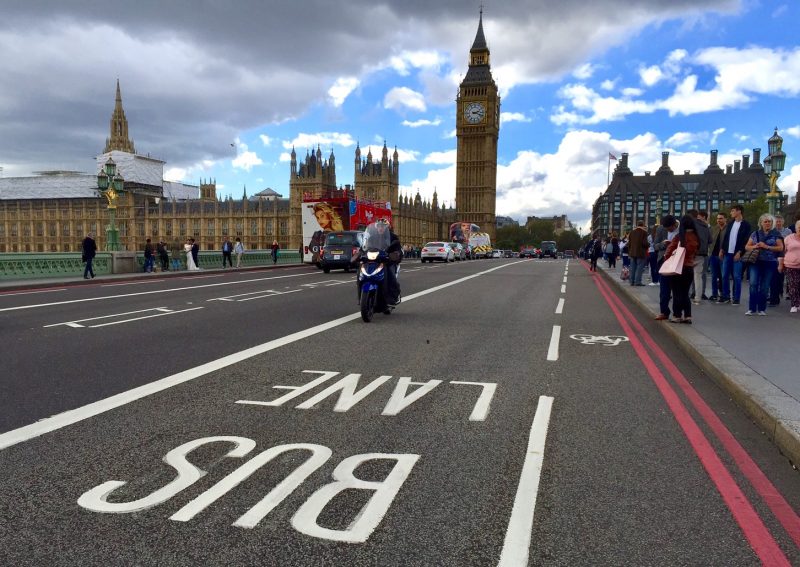
MAG: “Support Doubles: Motorcycle Bus Lane Campaign Unstoppable”
Cost structures that don’t reflect reality
Motorcycles take up less space, cause less road wear, and reduce congestion — yet riders are frequently penalised financially.
High insurance premiums, limited commuter discounts, and unrealistic security requirements all undermine the transport argument.
If governments genuinely want people out of cars, the financial case must be obvious. Motorcycling should not occasionally be cheaper than driving — it should consistently undercut car ownership in real-world use.
Small bikes and electric motorcycles are the future of transport
The future of motorcycle transport is not defined by large-capacity machines. It’s being shaped by:
-
electric motorcycles
-
scooters
-
125cc–400cc commuter bikes
These machines suit urban journeys perfectly. They’re affordable, efficient, easy to park, and aligned with environmental targets.
Yet they’re still described as “starter bikes”, as if riders are expected to move on to something bigger and more expensive.
For transport, smaller bikes are not a stepping stone — they are the destination.
Employers and cities must take motorcycles seriously
Cycling culture changed dramatically with the introduction of cycle-to-work schemes. Motorcycles were left out entirely.
A genuine transport strategy would include:
-
motorcycle-to-work schemes
-
secure workplace parking
-
charging facilities for electric bikes
-
mileage incentives for two-wheel commuters
If local authorities want fewer cars on the road, they must actively support alternatives — not merely tolerate them.
Safety policy needs realism, not ideology
Motorcycling involves risk — but so does every form of transport. The difference is how that risk is managed.
A transport-led approach focuses on:
-
high-quality rider training
-
better road design
-
driver awareness campaigns
-
realistic safety messaging
Fear does not improve safety. Skill, infrastructure, and understanding do.
Motorcycling already is transport — it’s just not treated like it
Millions of people worldwide rely on motorcycles every day to get to work, deliver goods, and move through crowded cities efficiently.
The uncomfortable truth is that motorcycling is already a proven transport solution. What’s missing is political will, cultural acceptance, and joined-up thinking.
If motorcycles were treated as part of the transport system instead of a niche problem, congestion would ease, emissions would fall, and cities would function better.
The bike is ready.
The system just needs to catch up.