

Why Motorcycles Are Everyday Transport in Asia — And What the UK Can Learn
In the previous article, we argued that motorcycling should be treated as serious transport rather than a weekend hobby. The logic was simple: motorcycles reduce congestion, lower emissions, cost less to run, and move people efficiently through crowded cities.
That argument isn’t theoretical.
Across much of Asia, motorcycling has already proven itself as a dominant form of everyday transport. Not as a lifestyle statement. Not as a compromise. But as the most practical solution available.
So why has motorcycling flourished as daily transport in Asia — and struggled to achieve the same status in the UK?
The answers are uncomfortable, but instructive.
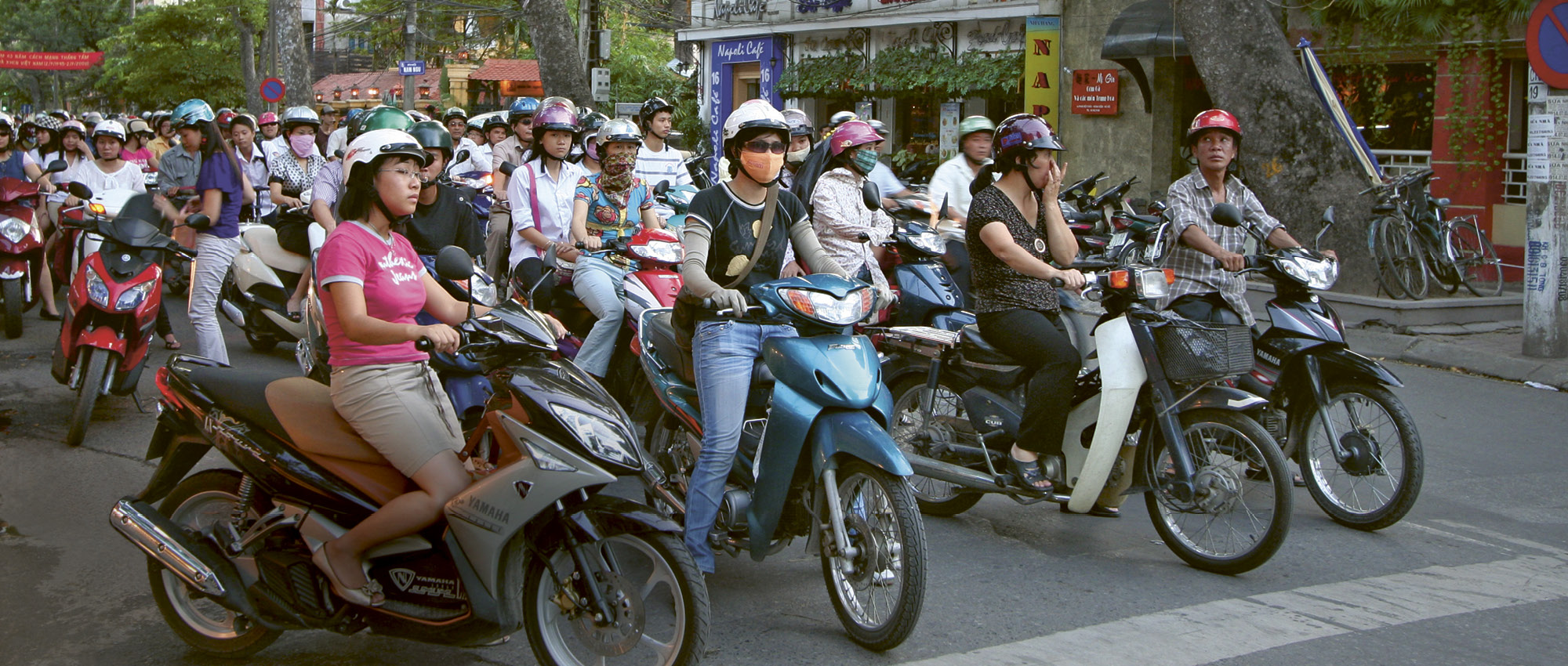


Density forces practicality
Asian cities are built under intense pressure. Population density is high, road space is limited, and travel demand is relentless. In that environment, cars quickly become inefficient — not just slow, but unworkable.
Motorcycles thrive because they:
-
use minimal road space
-
move through congestion instead of contributing to it
-
park easily in dense urban areas
-
adapt to narrow streets and informal layouts
This isn’t ideology or environmental virtue-signalling. It’s spatial reality. When millions of people need to move through tight urban spaces every day, the smallest effective vehicle naturally wins.
In the UK, transport debates often start with abstract policy goals. In Asia, they start with one question: what actually works?
Motorcycles are not a stepping stone — they are the destination
In much of Asia, motorcycles are not seen as a temporary phase on the way to car ownership. They are a long-term transport solution used by people from all walks of life.
Motorcycles are routinely used for:
-
commuting to work
-
carrying passengers
-
family transport
-
trades and services
-
deliveries and logistics
That framing changes everything.
When a society accepts motorcycles as normal transport, the entire system aligns around them — from licensing and insurance to road design and driver behaviour. There is no cultural anxiety about whether riding is “worth it”. It simply is.
In contrast, UK motorcycling is still framed as provisional. Something you do until you move on. That mindset alone prevents it from ever becoming embedded.
Cost isn’t a secondary factor — it’s the main one
Affordability is one of the most powerful drivers of motorcycle use in Asia.
Motorcycles are:
-
cheap to buy
-
cheap to fuel
-
cheap to maintain
-
easy to repair locally
-
accessible to a wide population
For many riders, a motorcycle isn’t an alternative to a car — it’s the only viable way to access work, education, and opportunity.
This economic realism is something the UK often ignores. When transport policy treats affordability as optional rather than central, it unintentionally excludes huge numbers of people. Motorcycles, by their nature, lower the barrier to mobility.
That’s not a weakness. It’s a strength.
Infrastructure evolved with motorcycles, not against them
Asian road systems didn’t reluctantly accommodate motorcycles — they evolved alongside them.
That means:
-
junctions that expect motorcycles
-
traffic flows designed around mixed vehicle types
-
parking norms that include two wheels by default
-
drivers trained to anticipate motorcycles everywhere
As a result, motorcycles are visible, predictable, and integrated.
In the UK, motorcycles are often treated as edge cases. They’re permitted, but not planned for. That difference in expectation affects safety, behaviour, and confidence on the road.
When motorcycles are assumed to belong, roads work better for everyone.
Smaller bikes are respected, not dismissed
In Asia, nobody apologises for riding a small-capacity bike.
Scooters and lightweight motorcycles are respected because they:
-
do exactly what’s required
-
last for years with basic maintenance
-
cost little to own and run
-
suit urban travel perfectly
There’s no cultural obsession with displacement, performance, or image. The bike is judged on function, not status.
In the UK, small bikes are still labelled as “starter machines”, implying they’re something to outgrow. That attitude undermines their credibility as transport and pushes riders toward bigger, less practical options.
If the goal is mobility, smaller bikes are not inferior — they’re optimal.
Electric two-wheelers are accelerating the shift
Asia is now leading the global transition to electric two-wheel transport — and doing it quietly.
Electric motorcycles and scooters fit urban life because they:
-
cover short journeys efficiently
-
reduce local air pollution
-
cost very little to run
-
integrate easily into dense housing
Crucially, this shift is happening faster because motorcycles were already accepted as transport. There’s no cultural resistance to overcome — just a technology upgrade.
In the UK, electric motorcycles often struggle for relevance because the underlying transport legitimacy was never established in the first place.
Risk is acknowledged, not exaggerated
Motorcycling carries risk — but in Asia, that risk is managed pragmatically rather than emotionally.
The focus is on:
-
riding skill
-
predictability
-
shared road awareness
-
practical safety improvements
There’s little appetite for moral panic or exaggerated fear narratives. Risk is weighed against necessity, cost, and efficiency — exactly as it is with every other transport mode.
In the UK, risk is often used as a justification to marginalise motorcycling rather than improve conditions around it.
The lesson is simple, and inconvenient
Asia didn’t embrace motorcycles because they’re fun.
It embraced them because they work.
They move more people using less space, fewer resources, and lower costs. Everything modern transport policy claims to prioritise — already delivered, quietly, on two wheels.
The real question for the UK isn’t whether motorcycles can be serious transport.
It’s why we keep pretending they aren’t.