

Paul Sample – The Man Who Gave Bikers Their Own Anti-Hero in Ogri
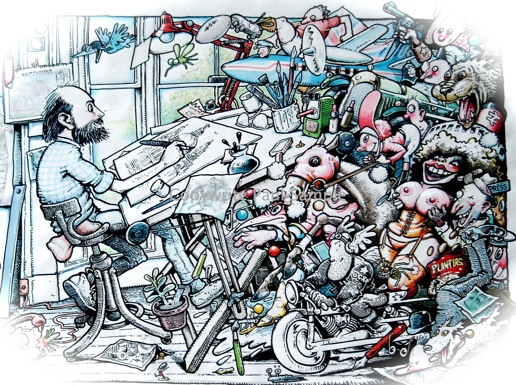
There are motorcycles you ride. There are motorcycles you dream about. And then there are motorcycles you recognise instantly from a single cartoon panel.
For generations of British riders, that motorcycle belonged to Ogri — the leather-clad, slightly unhinged, fiercely loyal, mechanically inventive biker who thundered across magazine pages with exhaust smoke, sarcasm and just enough truth to make you laugh out loud at your own riding habits.
Behind him stood one man: Paul Sample. And in many ways, Sample didn’t just create a cartoon character — he created a mirror for the motorcycling community.
The Man Behind the Ink
Paul Sample was not an outsider looking in on biker culture. He was one of us. A rider. An observer. A man who understood that motorcycling isn’t simply transport — it’s identity.
Sample’s artistic roots were grounded in illustration, but his genius lay in combining sharp visual storytelling with an insider’s understanding of two-wheeled life. His work began appearing in motorcycle publications in the 1970s, a time when British biking culture was evolving rapidly. Café racers, custom builders, tourers, racers — everyone had an opinion, and everyone thought they were right.
Sound familiar?
Ogri first appeared in Bike Magazine in 1977, and the timing could not have been more perfect. Britain’s motorcycling scene was shifting. Japanese machines were dominating performance. Traditional British marques were struggling. Riders were wrestling with changing identities — speed versus heritage, touring versus street, technology versus romance.
Sample captured all of it in ink.
Who Was Ogri?
Ogri was a burly, bearded, leather-clad biker with a fearsome custom machine that defied neat classification. His bike was a glorious mechanical exaggeration — part chopper, part brute force engineering experiment, part satire of every rider who insists their machine is “just slightly modified.”
Ogri wasn’t polished. He wasn’t politically correct. He wasn’t particularly safe.
But he was authentic.
Through Ogri and his long-suffering partner Mitzi, Sample built a cast of characters that felt instantly recognisable. The arguments about reliability. The obsession with horsepower. The heroic claims about road tests. The quiet terror of mechanical failure. It was all there — lovingly mocked but never cruel.
Ogri was the biker we all knew. Sometimes he was the biker we were.
The Inspiration: Real Life, Turned Up to Eleven
What made Ogri resonate so powerfully was Sample’s deep familiarity with motorcycling culture. He understood that riders often take themselves very seriously — and that’s precisely why gentle satire works.
Ogri’s exaggerated engineering creations poked fun at the endless quest for performance. His indestructible confidence reflected the bravado that often accompanies leather jackets and loud exhausts. His mechanical “improvements” lampooned the shed-built experiments that every home mechanic swears are genius.
Sample’s humour wasn’t generic slapstick. It was informed humour. Technical humour. Cultural humour.
He could reference suspension geometry in one panel and romanticise the open road in the next.
That balance is rare.
Why Bikers Loved Him
Motorcyclists are a tribal bunch. We guard our culture. We don’t always welcome being laughed at — unless the person laughing is clearly part of the tribe.
Paul Sample was part of the tribe.
Ogri never mocked riders from a position of superiority. Instead, the strip celebrated the absurdity of being obsessed with two wheels. It acknowledged that motorcycles break down at inconvenient moments. That “essential modifications” rarely stay within budget. That arguments about brands can resemble religious debates.
And yet, beneath the humour, there was admiration.
Ogri wasn’t portrayed as foolish. He was passionate. Independent. Creative. Loyal. Occasionally reckless, but always committed to the ride.
That’s why bikers embraced him.
In a world where media often caricatured motorcyclists as hooligans or outlaws, Ogri was an insider’s portrait. He captured the eccentric brilliance of riders without the lazy stereotypes.
Cultural Timing: The 1970s and 80s Biker Identity
Ogri arrived at a crucial moment in British motorcycling history. The 1970s and 80s saw enormous shifts in the industry. Japanese engineering was redefining reliability and speed. Traditional British brands were fading or fighting for survival. Rider identity was in flux.
Humour provided stability.
Ogri offered continuity — a reminder that while machines change, the spirit of motorcycling doesn’t. The desire to tinker. The thrill of speed. The camaraderie at cafés. The unspoken nod between riders.
Sample’s work reinforced that shared identity.
And because it ran regularly in a respected publication, Ogri became part of the rhythm of riding life. You didn’t just buy the magazine for road tests — you bought it for the cartoon.
That’s cultural impact.
Technical Detail Wrapped in Comedy
One of Sample’s most underrated skills was technical accuracy. The bikes in Ogri weren’t vague sketches. They were detailed, mechanically convincing machines.
Even when exaggerated, they felt plausible.
That attention to detail earned respect. Riders could see that Sample understood torque arms, engine layouts, carburettor quirks and suspension behaviour. The humour landed harder because it was grounded in truth.
It’s easy to write broad jokes about motorcycles. It’s much harder to make a joke about valve timing that still works.
Ogri managed both.
Beyond the Page: Merchandise and Legacy
As Ogri’s popularity grew, the character moved beyond the printed strip. Posters, merchandise, collected volumes — the character became a badge of honour.
Owning an Ogri print wasn’t just about liking a cartoon. It signalled belonging. It said: I get it.
For many riders, Ogri artwork hung in garages next to oily tools and half-finished projects. It felt at home there.
That is perhaps the highest compliment possible.
The Human Side of Paul Sample
What made Sample’s work endure was that it never felt manufactured. It felt personal. Observational. Drawn from real rides, real breakdowns, real café conversations.
There was warmth in his satire.
He didn’t aim to shock. He aimed to connect.
In doing so, he built something more enduring than a comic strip. He built folklore.
Why Ogri Still Matters
Motorcycling today is very different from 1977. Electronics dominate modern machines. Traction control replaces bravado. Social media amplifies every opinion instantly.
And yet, Ogri’s themes remain relevant.
Riders still argue about brands. They still believe their modifications are revolutionary. They still romanticise road tests and underplay mechanical disasters.
The tools may have changed. The rider mindset hasn’t.
That’s why Ogri remains culturally important. He captured something timeless about motorcyclists — our stubborn independence, our inventive spirit, and our ability to laugh at ourselves (eventually).
A Cartoon That Became Part of Biker DNA
Few characters embed themselves so deeply into a subculture that they feel inseparable from it. Ogri achieved that status.
And Paul Sample deserves recognition not simply as a cartoonist, but as a chronicler of British motorcycling life.
He documented the passion, the absurdity, the loyalty and the madness — and he did it with ink and wit rather than judgement.
In an era when motorcyclists were often misunderstood, Ogri gave them a voice that was both humorous and proud.
And perhaps that’s the secret of his popularity.
Ogri didn’t laugh at bikers.
He laughed with them.
And if you’ve ever spent an afternoon convinced your latest modification would transform your machine into a fire-breathing masterpiece — only to discover it needs “minor adjustments” — then you already understand why Paul Sample’s creation became legendary.
Some heroes wear capes.
Others wear leathers and insist the vibration is “character.”
Bought my first bike in76(GT.250),and also my first ‘bike’ mag.That’s when the love of Mr.Samples work began. Very much missed Paul,RIP.😢
RIP Paul you did us proud,Ogri and Malcolm were Awsome staying clear of planet ovlov
Loved Ogri in Bike about 40 years ao and still have Ogri T Shirt from a Bike show at someplace, sometime in the 80’s. What do you have for sale
Been trying to get HJC to re-issue their Ogri themed helmet as can’t think of a better practical tribute to Paul Sample’s genius